I'm at a strange place in my life. Sometimes I'm torn on this blog as to how much of my personal life to post...on the one hand, I feel like it has no real relevance here and it's best to keep those to spheres completely separate...or as separate as possible. On the other hand, what is going on in my life greatly influences what I read and my general reading habits.
I have been sick for the last month. Of course it comes during Ulysses. It was supposed to be a happy time...my husband and I were expecting. But they lie when they tell it's "morning sickness" because I was sick ALL THE TIME, and for a week survived on chocolate poptarts, macaroni and cheese and baked potatoes. Then, mac & cheese started to make me sick so I switched to spaghetti. I couldn't read at all. This is why I needed something comforting, something easy. I finished Oranges Are Not the Only Fruit last Friday while sitting in my doctor's waiting room. An hour later, I knew that I had had a miscarriage. The next day, I spent a few hours in bed and finished the second movement of Dance to the Music of Time...so now I'm officially half way through it. Over the weekend I picked up Loving by Henry Green, which is ok so far and Once and Future King, which I don't really care for yet (I'm only on Chapter 2), but we'll see where it goes. On Wednesday I had a medical procedure done at the hospital, so for right now other than the big purple bruise on my wrist from the IV, I'm physically recovered or recovering. But I think that it will take a long time to recover emotionally. This has been a rough month, and now it's over, but I don't want it to be.
Yesterday, I picked up The Trick is to Keep Breathing by Janice Galloway. I bought this book two years ago and have been afraid to read it. Somewhere, I read or heard someone say that it's not a book to read when you're at all feeling down, because it is A DEPRESSING BOOK. But seriously, do they expect someone to read such a book when they're happy? I like it thus far. I can tell it will be bleak. But bleak is a place where I am at right now, and I'm sure it will be nice to have Galloway for company.
Showing posts with label check. Show all posts
Showing posts with label check. Show all posts
Friday, August 8, 2008


Sunday, August 3, 2008
Oranges Are Not the Only Fruit
I adore Jeanette Winterson. I came to her through an interview I had seen on a Bill Moyers' PBS special called "Faith and Reason." The program wasn't really about either faith or reason...at least the episodes I saw, which focused a lot on mythology and the role that it can play in our lives today. This was probably around the same time that I had become interested in Joseph Campbell. Winterson had recently written a retelling of the Atlas myth called Weight (which I own but have not yet read). I immediately fell in love with Winterson. I printed out the transcript for the show and kept it on my kitchen table for a long time. What a life she had! Winterson is someone who understands the importance of reading...she understands what it can mean in a person's life, and that was evident in the Moyers interview:
My first encounter with Winterson's writing was Written on the Body. I was completely blown away by the power of that novel and the author's writing. It was like a punch in face. Winterson is known for being arrogant and confident about herself and her writing. She has declared herself heir to Virginia Woolf. She has nominated her own books for literary prizes and she has declared herself her favorite living author. Usually, that would get on my nerves. But I believe that Winterson has good reason to be so confident. She is a very powerful, gifted writer, and one of my favorites that is currently writing.
So, when this not feeling well thing came around, and the only book that I had to read was Ulysses, which gives me headaches on its own, I knew that I needed something in between... something that wouldn't be too difficult to read, but something that I could enjoy...something comforting, that I could curl up with in bed and not feel overwhelmed or lonely. And there is Oranges are Not the Only Fruit, starting up at me from the pile. I picked it up, took it into bed, read the first paragraph and thought, yes...this is what I needed.
For some reason, Oranges evoked for me the same landscape as Charlie Bucket's house in Willy Wonka. This poor, industrial wasteland, where the streets are nothing but mud, and the sky is always gray or orange-ish. It is always fall or winter, and the Winterson's live in a shack at the end of the road. There is nothing in the book that describes the place as that (except for the outdoor plumbing), but that is what it evoked for me. Bleakness. And on top of this bleakness is Jeanette, like a fireball.
Oranges isn't exactly autobiography. It's a way of using yourself and the past to create a fiction around all of that. She is telling stories...but there's no reason for us to believe that they are entirely true, even in a book cast as a memoir. (Winterson's mother was mad about her portrayal in Oranges because she said it wasn't true. Wintersons' response was, "Who said it was supposed to be true?"). The story is interspersed with fairy tales to show how Jeanette is dealing with her problem: her family is crazy Pentecostal religious, and she is a lesbian.
Winterson is fabulous in this book, as she was with Written on the Body. She is forceful and aggressive, both personally and in her writing. A quotation:
There is just something about the prose that knocks you over. The punch in the face.
Winterson takes her work very seriously. It's not just writing to her...you can tell by the way that she talks about the importance of reading and the role that books played in her life that she has reason to take her craft seriously. I will leave you with some Winterson quotes, from her website:
"Opening a book often opens a door."
"The books we love say something about us, and about our friends. Scanning someone's bookshelf can tell you as much as reading their diary. The quickest way to intimacy is not to share a bed or a holiday, but to share a book."
"What is certain is that we could no more be parted from the books we love than be parted from ourselves. It's not even a question of re-reading them often. I like to touch their spines from time to time, or pull out a page here and there, and just look at it for pleasure. When I'm in a mess, I go to my books, and out of the fairly large number I like to have around me, there are a few that are as close as any living friend. "What shall I do?" I ask, and there is always an answer, though not always the answer I want."
"The best comfort, as ever, is wide reading, so that when you need that poem, it is already there."
I knew that this was an author I had to seek out.My mother was terrified of any secular influences entering our lives. My father is illiterate and every day my mother used to read to us from the King James Bible and only six books were allowed in the house. The Bible was one, and the other five were books about the Bible.
Although in our house books weren't allowed, because I had a job on the market stool I began to buy books with the money that I was earning and smuggle them in secretly and hide them under the bed. Now anybody with a single bed, standard size, and a collection of paperbacks, standard size, will know that 77 per layer can be accommodated under the mattress. And this is what I did. And over time, my bed began to rise visibly. And it was rather like The Princess & The Pea.
And one night when I was sleeping closer to the ceiling than to the floor, my mother came in, because she had a suspicious nature. And she saw a corner of the book poking out from under the counter pen. And she tugged at it, and this was a disastrous choice, because it was by D.H. Lawrence and it was WOMEN IN LOVE. She knew that Lawrence was a Satanist and a pornographer, because my mother was an intelligent woman. She had simply barricaded books out of her life, and they had to be barricaded out of our lives. And when challenged with her defense, she always used to say, "Well, the trouble with a book is that you never know what's in it until it's too late." How true.
The books came tumbling down and me on the top of them onto the floor. Mrs. Winterson gathered up the piles of books, and she threw them out of my bedroom window and into the back yard. And then she went and got the paraffin stove, emptied the contents onto the pile of books and set fire to them.
And I learned then that whatever is on the outside can be taken away. Whatever it is that you think of as precious can be destroyed by somebody else. That none of it is safe. That there is always a moment when the things that we love, the things where we put our trust can be taken away, unless they're on the inside. And that's why I still memorize text, because if it's on the inside, they can't take it away from you, because nobody knows what's there. And I think that one of the reasons that tyrants hate books, ban them, burn them is not simply what they contain though that's often the obvious reason, but what they represent. Because reading is an act of free will, and it's a private act. It's an intimate dialogue between you and the text. And in there is all kinds of possibility.
My first encounter with Winterson's writing was Written on the Body. I was completely blown away by the power of that novel and the author's writing. It was like a punch in face. Winterson is known for being arrogant and confident about herself and her writing. She has declared herself heir to Virginia Woolf. She has nominated her own books for literary prizes and she has declared herself her favorite living author. Usually, that would get on my nerves. But I believe that Winterson has good reason to be so confident. She is a very powerful, gifted writer, and one of my favorites that is currently writing.
So, when this not feeling well thing came around, and the only book that I had to read was Ulysses, which gives me headaches on its own, I knew that I needed something in between... something that wouldn't be too difficult to read, but something that I could enjoy...something comforting, that I could curl up with in bed and not feel overwhelmed or lonely. And there is Oranges are Not the Only Fruit, starting up at me from the pile. I picked it up, took it into bed, read the first paragraph and thought, yes...this is what I needed.
Like most people I lived for a long time with my mother and father. My father liked to watch the wrestling, my mother liked to wrestle; it didn't matter what. She was in the white corner and that was that.
She hung out the largest sheets on the windiest days. She wanted the Mormons to knock on the door. At election time in a Labour mill town she put a picture of the Conservative candidate in the window.
She had never heard of mixed feelings. There were friends and there were enemies.
Enemies were: The Devil (in his many forms); Next Door; Sex (in its many forms); Slugs
Friends were: God; Our dog; Auntie Madge; The Novels of Charlotte Bronte; Slug pellets
and me, at first. I had been brought in to join her in a tag match against the Rest of the World. She had a mysterious attitude towards the begetting of children; it wasn't that she couldn't do it, more that she didn't want to do it. She was very bitter about the Virgin Mary getting there first. So she did the next est thing and arranged for a foundling. That was me.
For some reason, Oranges evoked for me the same landscape as Charlie Bucket's house in Willy Wonka. This poor, industrial wasteland, where the streets are nothing but mud, and the sky is always gray or orange-ish. It is always fall or winter, and the Winterson's live in a shack at the end of the road. There is nothing in the book that describes the place as that (except for the outdoor plumbing), but that is what it evoked for me. Bleakness. And on top of this bleakness is Jeanette, like a fireball.
Oranges isn't exactly autobiography. It's a way of using yourself and the past to create a fiction around all of that. She is telling stories...but there's no reason for us to believe that they are entirely true, even in a book cast as a memoir. (Winterson's mother was mad about her portrayal in Oranges because she said it wasn't true. Wintersons' response was, "Who said it was supposed to be true?"). The story is interspersed with fairy tales to show how Jeanette is dealing with her problem: her family is crazy Pentecostal religious, and she is a lesbian.
Winterson is fabulous in this book, as she was with Written on the Body. She is forceful and aggressive, both personally and in her writing. A quotation:
As it is, I can't settle, I want someone who is fierce and will love me until death and know that love is as strong as death, and be on my side for ever and ever. I want someone who will destroy and be destroyed by me...Romantic love has been diluted into paperback form and has sold thousands and millions of copies. Somewhere it is still in the original, written on tablets of stone. I would cross seas and suffer sunstroke and give away all I have...
There is just something about the prose that knocks you over. The punch in the face.
Winterson takes her work very seriously. It's not just writing to her...you can tell by the way that she talks about the importance of reading and the role that books played in her life that she has reason to take her craft seriously. I will leave you with some Winterson quotes, from her website:
"Opening a book often opens a door."
"The books we love say something about us, and about our friends. Scanning someone's bookshelf can tell you as much as reading their diary. The quickest way to intimacy is not to share a bed or a holiday, but to share a book."
"What is certain is that we could no more be parted from the books we love than be parted from ourselves. It's not even a question of re-reading them often. I like to touch their spines from time to time, or pull out a page here and there, and just look at it for pleasure. When I'm in a mess, I go to my books, and out of the fairly large number I like to have around me, there are a few that are as close as any living friend. "What shall I do?" I ask, and there is always an answer, though not always the answer I want."
"The best comfort, as ever, is wide reading, so that when you need that poem, it is already there."
Sunday, July 13, 2008
Eat, Pray, Love
 I'll be honest - I'm skeptical of other people's "spiritual journeys" and the books they write about them. Frankly, my dear, I don't give a damn. And not only do I not give a damn, I think that more often than not, they're filled with half-baked of ideas that feed into people's need to believe that there is some grand scheme for their life...that if they only could figure out what it is that they're supposed to be doing, they'd be happy. As in, "If only I could meet a Balinese medicine man...maybe he would know what my job is supposed to be here." I'm too much of a cynical existentialist to be able to stand that stuff. When I was 13 years old, I had a dream that I was walking in a floating hallway...I asked out loud, "what is the meaning of life?" A voice answered me and said, "There is none." It took me another two years to figure it out - oh, right...there isn't an externally prescribed meaning to anyone's life...you have to make your own meaning. That epiphany was two years before the beginning of my love for Sartre and Camus and nine years before I ran into Joseph Campbell who said, "Life is without meaning. You bring the meaning to it. The meaning of life is whatever you ascribe it to be." Give me Sartre's Existentialism and Human Emotions and Campbell's Myths to Live By and Reflections on the Art of Living and that's about all the spiritual journey stuff I need.
There has been buzz around Eat, Pray, Love...but not buzz in the circles that I frequent. I'm talking about buzz in the Oprah book club crowd. At least, I think that's where it was. Anyway, it was out there, in spiritual journey book-land, and I only heard mumblings...like feeling a slight tremor from an earthquake 10,000 miles away. I saw it at the bookstore, and rolled my eyes. "I'm not reading that crap," I thought to myself. And then, of course, my book club chooses it for the July reading. I had already "scheduled" Ulysses for July, so the choice of books was odd in a few ways. Firstly, I was glad that it wasn't a thicker, denser book that was chosen. I could not have sloshed through both Ulysses and The Heart is a Lonely Hunter. I knew that EPL would be light reading, so in that sense I wasn't too upset. But secondly, I knew that it would create this weird force...to read two books so dichotomously opposed to each other...maybe there would be an explosion - but hopefully not in my head.
I'll start out by saying that by page 40, most of this review had already begun spewing - yes, spewing - out, like a volcano out of control. The basic plot is the following: Gilbert has gone through a messy divorce and decides to embark on a year long journey (paid for by the book advance she gets to write a story about trip) to explore pleasure and devotion (or something like that) in three countries. She will eat in Italy, live in a guru-following community in India, and visit a Balinese medicine man and fall in love in Indonesia. I don’t think that I need to say that I disliked this book. In fact, I have so many things to criticize about it, that I don’t know where to start. Within the first five pages of this book, I compulsively began to roll my eyes. Oh geez, I thought, 300+ pages of this?
Firstly, Gilbert needed an editor. If she had an editor, s/he should have been fired immediately. The amount of unnecessary bullshit and description was distracting. For example, Gilbert decides that she wants to learn Italian. She’s in this self-discovery mode in which she realizes for the first time in her life (so she says) the idea that she can pursue her own interests. Rather than just say, I always wanted to learn Italian, she has to go into the following description:
“For years, I wished I could speak Italian – a language I find more beautiful than roses – but I could never make the practical justification for studying it…What was I going to do with Italian? It’s not like I was going to move there. It would be more practical to learn how to play the accordion. But why must everything always have a practical application? I’d been such a diligent soldier for years – working, producing, never missing a deadline, taking care of my loved ones, my gums and my credit record, voting, etc. Is this lifetime supposed to be only about duty? In this dark period of loss, did I need any justification for learning Italian other than that it was the only thing I could imagine bringing me any pleasure right now? And it wasn’t that outrageous a goal, anyway, to want to study a language. It’s not like I was saying, at age thirty-two, ‘I want to become the principal ballerina for the New York City Ballet.’ Studying a language is something you can actually do.” (pg 23-24).
She then goes on to explain the pleasure of learning Italian:
“Every word was a singing sparrow, a magic trick, a truffle for me…I became one of those annoying people who always say Ciao! Only I was extra annoying, since I would always explain where the word ciao comes from. (If you must know, it’s an abbreviation of a phrase used by medieval Venetians as an intimate salutation: Son oil suo schiavo! Meaning: “I am your slave!”) Just speaking these words made me feel sexy and happy. My divorce lawyer told me not to worry; she said she had one client (Korean by heritage) who, after a yucky divorce, legally changed her name to something Italian, just to feel sexy and happy again.”
I just wanted to shout: LIZ! You like Italian? You want to learn Italian? SFW!-Just get to it already! After all, was it really that impractical anyway? She’s a writer who travels often to cover stories, etc. And since it was her idea to write this book before setting off on the journey, her decision to learn Italian probably influenced her decision to go to Italy. If she had pursued Russian or Chinese or Swahili, this book might not have had an Italy chapter.
This brings us to my second criticism: the fact that the book was conceived of before the journey. Isn’t it convenient that EVERYTHING that happens to her is so PERFECT that it fit right into the story. Seriously: do people like Richard from Texas in the Ashram (with his "down-home" wisdom) and "Luca Spaghetti" really exist in the real world? I doubt it. Another example (again, with too much description): “Later in the day, I found a library. Dear me, how I love a library. Because we are in Rome, this library is a beautiful old thing, and within it there is a courtyard garden which you’d never have guessed existed if you’d only looked at the place from the street. The garden is a perfect square [Kristin’s Question: is there any square which isn’t perfect? I mean, if something was an imperfect square, wouldn’t it, by definition, not be a square, but rather a rectangle? Just asking], dotted with orange trees and, in the center, a fountain…I found a seat under an orange tree and opened one of the poetry books I’d purchased yesterday. Louise Glück. I read the first poem in Italian, then in English, and stopped short at this line: Dal cento della mia venne una grande Fontana… ‘From the center of my life, there came a great fountain…’ I set the book down in my lap, shaking with relief.” (pg. 39). Isn’t that just perfect? Isn’t it just perfect that in Bali a few years before her trip, she met the medicine man that she would visit again, and he read her fortune and said that she would come back. Now, if I was STUPID, I would say (in trippy, spaced out, new-age voice) “Wow. Like, he was totally right. He completely saw what was going to happen to her. Isn’t that such a miracle?” No, it wasn’t. The medicine man told her she was going to come back, so she pitched a book to some publishers about her taking a trip back to Indonesia. Not a miracle. Gilbert is also hyper-aware of the reader and the fact that she is writing a book. She interjects alternative titles, stops in the middle of thoughts and says, “I know this is going to sound x, but…” This is confused and complicated as the book is written in the present tense, as if she actually wrote the thing during her travels, and then came back afterwards and put in stuff that could only have been known after the fact.
Throughout the book, it seemed that she was trying to deliberately be cute and endearing, which only aggravated me. Almost every other sentence seemed like she was trying to make friends with the reader, to have childish enthusiasm for everything, which only came across as lame and ridiculous. A friend recommends a pizzeria in Naples that he considers the best pizza in town. What is Gilbert’s reaction? “I found this a wildly exciting prospect, given that the best pizza in Italy is from Naples, and the best pizza in the world is from Italy, which means that is pizzeria must offer…I’m almost too superstitious to say it…the best pizza in the world? …I love my pizza so much, in fact, that I have come to believe in my delirium that my pizza might actually love me, in return. I am having a relationship with this pizza, almost an affair.” Really? I’m going to be honest – at that point I thought to myself, Liz, maybe you really do need to start taking your medicine again, because this is getting on my nerves – YOU are getting on my nerves. Is there a medication for being excessively hyperbolic? Because if there is, will someone please get her a prescription?
In the beginning of the book, when she is having a breakdown because she hates being married, and she is sobbing on the bathroom floor at 3 a.m. (as all reviews of this book are obligated to tell you), she decides to pray. “What I said to God through my gasping sobs was something like this: ‘Hello God. How are you? I’m Liz. It’s nice to meet you.’ That’s right – I was speaking to the creator of the universe as though we’d just been introduced at a cocktail party…In fact, it was all I could do to stop myself from saying, ‘I’ve always been a big fan of your work.’” Oh, aren’t you sooo cute Gilbert? ARRRGGGHHH! Just writing this review is making me infuriated at this poppycock!
On top of attempting to be endearing, she is also extremely apologetic. The easiest example I can give is the following: “What happened was that I started to pray. You know – like, to God. Now, this was a first for me. And since this is the first time I have introduced that loaded word – GOD – into my book, and since this is a work which will appear many times again throughout these pages, it seems only fair that I pause here for a moment to explain exactly what I mean when I say that word, just so people can decide right away how offended they need to get. Saving for later the argument about whether God exists at all (no-here’s a better idea: let’s skip that argument completely), let me first explain why I use the word God, when I could just as easily use the work Jehovah, Allah, Shiva, Brahma, Vishnu or Zeus…For some reason why I pray, I do not address my prayers to The Universe, The Great Void, The Force, The Supreme Self, The Whole, The Creator (etc.)…I have nothing against any of those terms. I feel they are all equal because they are all equally adequate and inadequate descriptions of the indescribable. But we each do need a functional name for this indescribably, and “God” is the name that feels the most warm to me, so that’s what I use. I should also confess that I generally refer to God as “Him,” which doesn’t bother me because, to my mind, it’s just a convenient personalizing pronoun, not a precise anatomical description or a cause for revolution. Of course, I don’t mind if people call God “Her,” and I understand the urge to do so. Again – to me, these are both equal terms, equally adequate and inadequate.” (pg 12-13). She is clearly going out of her way not to offend any of her readers. This contriteness crops up occasionally throughout EPL, and as always, I just want to shout, GET ON WITH IT ALREADY!
Not only do I not like the book itself, I do not like Gilbert. Because of the nature of this book, I’m not sure if I should say that I don’t like Gilbert as a narrator, or that I don’t like Gilbert the person. It’s a tough call. But whichever, I can’t stand her. She is obviously the type of person who thinks she is cute, endearing, that everyone likes her – the type of person who believes that she is the kindest, nicest, funniest, sweetest person you could ever meet. She tells us straight out, (again, in typical over-detailed fashion) “I can make friends with anybody. I can make friends with the dead. I once made friends with a war criminal in Serbia, and he invited me to go on a mountain holiday with his family. Not that I’m proud to list Serbian mass murderers amongst my nearest and dearest (I had to befriend him for a story, and also so he wouldn’t punch me)…but I’m just saying, I can do it. If there isn’t anyone else around to talk to, I could probably make friends with a four-foot-tall pile of Sheetrock.” (pg. 41) She is probably also the type of person who needs everyone to like her…the type of person who will obsess over why one particular person doesn’t think that she’s the greatest person on earth. I’ve known people like her, and in case you couldn’t guess, THEY REALLY GET ON MY NERVES. And I’m not trying to be rude when I say this, but is Gilbert as ‘learned’ as she tries to project? She is constantly quoting gurus, yogi masters, Sufi texts, Catholic saints and mystics, etc. etc., but instead of it coming across as someone who is intimately acquainted with the texts of various world religions (like the Joseph Campbell was), she comes across as someone who got a book of Religious Quotations and Anecdotes from Around the World and used it generously. It just didn’t feel genuine. And that, I would say, is in contrast to the rest of the book. As much as she thoroughly annoyed me, she did seem genuine in all her exuberance and exaggeration…lame and ridiculous, yes, but it didn’t seem like a put-on. And that at least made her less frustrating than if it had come across as fake. Because if there is any type of person who would probably get on my nerves more than someone like Gilbert is someone who pretends to be someone like Gilbert.
One last comment on Gilbert/EPL: regarding her marriage/divorce, on page 12, she tells us: “The many reasons I don’t want to be this man’s wife anymore are too personal and too sad to share here. (pg. 12). Really, Liz – you tell us about your masturbating (pg 287 for those who are into that sort of stuff), but the reasons you want a divorce are too personal? I’m just saying…
While sifting through the reviews at amazon.com, I was amazed that while the negative reviewers criticized Gilbert and the book (self-absorbed, annoying, aggravating, “relentless drivel,” immature, etc.), the positive reviews almost always included an attack on the negative reviewers: they're just jealous, they're just traditional soccer moms who couldn't understand, they're religious nuts who are offended by Gilbert's not searching for Jesus, etc. etc. The positive reviewers also seem to take offense that the haters are dissing Gilbert personally by not liking her book. As in, "Nobody forced you to pick up the book! Good for Gilbert in finding happiness! You shouldn't knock that." So, here's my disclaimer: I'm not criticizing Gilbert's journey, her decisions, her emotional state, her depression, divorce, whatever. I'm criticizing the book she was paid to write. Ok, maybe I'm a little jealous of the all-expenses-paid trip around the world - I'd take one of them if someone wanted to give it to me. But that had nothing to do with why I didn't like the book.
Additionally, these positive reviewers seem to think that because it's a personal story, no one has a right to criticize it. Here is an analogy: if I drew circles on the wall with marker and called it a work of art and tried to sell it to a museum, and you said my artwork was a piece of crap, well, that's your prerogative, as I put my spiritual circle drawing in the public sphere. You put something out in the public realm, you are open to criticism about the merits of your work. (As in, if you hate my blog and think that I'm stupid, you're permitted to think that, to tell me so, and to write about how and why I'm stupid on your own blog...so long as you're not misrepresenting what I said, or lying about me, or defaming my character, etc. - and I have the right to delete any of your nasty comments from my blog should you choose to leave any.) I am permitted to say that Denise Richards is a horrible actress who ruins every movie that I have ever seen her in. I don't care if her acting is a spiritual expression. Maybe she's a nice person (she seems relatively normal on her reality show), but I can still say she's a bad actress.
In the same way that Denise Richards utterly annoys me, Elizabeth Gilbert utterly annoys me. Maybe she's a nice person. She says she can make friends with anyone, and maybe if I knew her she would make friends with me. I'll be the first to admit that I am easily annoyed by people. This is a character trait that I recognize and probably should work on with my therapist. But there are certain types of people that I just have no patience with. I recognized Gilbert as one of those people (at least her narrative and writing style) by, oh, page 10.
I promised that I would come to this book with an open mind. I tried - I really, honestly did. But before the end of my first day of reading, I knew keeping an open mind would be more challenging than Gilbert's meditating with mosquitoes. I kept saying to Shawn, "Maybe I shouldn't be so judgmental. Maybe I'm just being an Oscar the Grouch about this thing." But you know what? Sometimes Oscar the Grouch was right (he really was the critical thinker in the bunch). For a long time, it was difficult for me to write on this blog about books I didn't like, and to be honest and vocal about the fact that I didn't like them. I didn't want to offend someone who might genuinely have enjoyed the book. But I'm so over that now. If you liked this book - good for you. I don't understand, but good for you.
And p.s. – I did NOT appreciate the pathetic attempt at an R.E.M. joke on page 208 of EPL. It was so bad, in fact, that I will not repeat it here.
Tuesday, June 24, 2008
The Heart is a Lonely Hunter
 The Heart is a Lonely Hunter - Carson McCullers
I read this book for the first time about two or three years ago, and I thought that it was just ho-hum. Later, I came across Doug Shaw's review and got it. Oh, that's what it was about! It went on my "To Be Re-read" list, and I was excited when my book club chose it to be June' read. I definately liked it much more the second time around.
The story begins in a southern mill town. Mr. Singer and Spiros Antonapoulus are deaf mutes who live together. Spiros is mentally unstable, and his cousin/guardian has him committed to an asylum. This completely breaks Mr. Singer’s heart. (Were they just friends? Were they lovers? I don’t know…I think it’s kind of irrelevant). Anyhoo, Spiros is institutionalized and Singer moves into a boarding house owned by the Kelly family.
The book then follows four town misfits (Mick Kelly, Dr. Copeland, Jake, and Biff) who believe they have found their bosom buddy in Mr. Singer. While Dr. Copeland believes that Mr. Singer is the only white man he has ever met who understands the plight of the “negro race,” Jake thinks that Singer understands the hardship of the worker in a capitalist society. Perhaps strangest of all is Mick, who believes that Singer understands music. Other people in the town believe that Singer is like them as well: the Turks think that he is a Turk, the union members believe that he is a CIO organizer or something, etc. Somehow, this deaf mute became the screen on which everyone projected themselves. They all are seeking understanding amidst frustration, disappointment and unfairness and they find in Singer exactly what they are looking for.
Singer, however, really has no clue what's up with all these crazy people...they think that he "gets" them, but in reality he doesn't. At one point in the novel, these four accidentally all find themselves in Singer's room at the same time, and while they will talk Singer's ear off when they are alone, they have nothing to say to each other - they are completely unable to relate to one another. Singer is the only one who understands them, even though he doesn't really.
Singer, of course, does the same thing with Spiros that the others do with him: he believes that Spiros understands, even though he couldn't care less about Singer unless food is involved. Singer does elaborate things to please Spiros, including buying him a movie projection machine to use in asylum and writing him letters (Spiros is illiterate). But Spiros probably even more removed from Singer than Singer is from his disciples. That's the sad part: Singer needs Spiros more pitifully than the gang of four need him.
What makes this whole thing even more tragic is that none of the four who love Singer realize what's going on with him regarding Spiros. He will disappear for a week or so at a time to visit his friend, but leaves no explanation, never tells anyone he's going away. When he returns, his "friends" will ask him where he was, but when he pretends not to understand their question, they just go on as if nothing had happened. They don't realize the depth of Singer's pain, while he sits and actively listens to all their problems. One day, Singer goes to visit Spiros to discover that he has died. Singer comes home and kills himself, and of course no one knows or understands why. The four others pretty much look at it as if Singer betrayed them.
At the book club, the discussion focused in large part on the nature of misfits and why those in the book could not "accept other people's acceptance..."; in other words, why are these misfits misfits? This is really something I've been hearing my entire life and it's very frustrating. I'm sure that while most people have felt out of place at some time or other, to be a misfit is to essentially feel out of place almost all of the time, even amongst other people who don't fit in. And no matter how hard one tries, you can never really feel part of the group...you're always separate, somehow...outside...like constantly being at a party where you don't know anyone and no one will talk to you. It's a search for understanding, like the characters in the book, and boils down to a fundamental question: can any of us really, truly be understood by someone else? The answer is probably not.
There was also a mention of whether these characters are "not right" because of the Southern Gothic style. Frankly, the characters in The Heart is a Lonely Hunter are some of the most normal characters that I have encountered in Southern literature. Compare this to Flannery O'Connor's crazy religious nuts, and I think you'll know what I mean. My favorite thing that was mentioned was by someone else who vocalized her feelings of misfit-ness, who said, "I was reading this book thinking, wow, McCullers really gets what it's like to be an outsider. And then in the end, there is no redemption, no hope for these characters. Come on Carson, I thought we were friends here!" That is really true...the book gives such life to these characters that don't fit in, but in the end they are trapped by their circumstances. No matter how talented Mick is musically, she's never going to write that symphony. Is that sad? Of course, but it's reality. It's what one would expect to happen given the circumstances of her life. McCullers doesn't include any sentimentality or emotion in the book...not for the characters, not for their situations, and dooms them all to the fates that they should be expected to have, not the ones that they should have. It's as if McCullers is saying, "oh well, such is life!" to anyone who desires to find hope in her book. But as I was writing the quote above, about the feeling of camaraderie with McCullers, I realized that to say that of the author - that she fundamentally understands - is to do the same thing that the characters did to Singer - she believed that the author really understood her life, and then realized that there was no understanding, and there is a sense of betrayal that comes with that...which is exactly what the characters felt after Singer shot himself.
I’m finding a trend in book club: when we read books that are dark and bleak, such as The Heart… and The Road, I LOVE them (or at least like them more than average), but the reactions of the others tends towards opposition and non-understanding of the book. With the happier books (Water for Elephants), I can’t stand them, but the consensus is, “what a great book!” July’s book is Eat, Pray, Love. I’m going into it with an open mind, but let’s just say I don’t have high hopes.
****************************
Right now, I’m winding down The Odyssey (about 80 pages to go) and gearing up for Ulysses. I’ll be honest – Joyce scars me, and I’m expecting my experience with Ulysses to be like being an athlete at the Olympics. Maybe it won’t be so bad…it’s just got such a horrible reputation. Seriously, it feels like getting ready for an athletic event – I’m preparing and I'm imagining people are patting me on the back saying “Good luck"...jumping around like a boxer ready for a fight. But it really can't be that difficult, right?
Thursday, May 29, 2008
Solaris - One Novel and One and a half Movies
Solaris - Stanislaw Lem; One Novel and One and a half Movies
Kris Kelvin is a psychologist who is requested to come to Solaris - a distant, mysterious planet - by a friend, Gibarian. When Kelvin arrives there, he knows things are a little off...Gibarian has killed himself, the robots are locked up, and the only other humans on the station (Sartorius and Snow) won't offer any information about what is going on. Kelvin is warned to be careful, to lock his doors, etc. but isn't told why. he soon finds out why: Kelvin falls asleep, and when he wakes up, there is Rheya, his wife who killed herself ten years prior. He is obviously scared and disturbed by this, and in his desperation he manages to get her on a little space craft and ship her out into space. He falls asleep again and when he wakes up, there is Rheya. But it isn't the same one that he just sent into orbit...it's a new copy.
As it turns out, everyone on board has had these visitors. you can't kill them, as it is discovered that they are made of some type of subatomic particles (or some other scientific anomaly) and therefore they are able to regenerate after an injury, including drinking liquid oxygen. They don't really sleep, they are never hungry, and they get violently angry when they are left alone. Sounds sort of like Gremlins, doesn't it? I wonder what happens if you get them wet... Anyhoo...Snow, Sartorius and Kelvin know it has something to do with the ocean, because the visitor thing didn't start happening until they began beaming x-rays at the ocean.
Ok...a little about the ocean. It covers the entire planet of Solaris and appears to be a single living organism. It shows some signs of being sentient, or conscious in some way (though different from our normal conception of "conscious"), and it reacts in unexpected ways to stimuli by creating physical phenomena that science cannot explain. It's a being (of some sort) capable - in theory - of communication, as are humans...but the two just don't speak the same language. And they don't have a universal translator like they do in Star Trek.
The rest of the novel deals with how to get rid of the copies, should they get rid of the copies, how to deal with the ocean, should they try more experiments, etc. In the end, Kelvin and Rheya don't live happily ever after. Snow and Sartorius create some type of ray gun (not really a ray gun, but we'll pretend it was) that would disintegrated the visitors, and Rheya asks to be destroyed. She began to have emotional issues when she realized that they called her Rheya, she looked, talked and acted like Rheya, but she wasn't Rheya; yet Kelvin, though he knew she wasn't actually his dead wife, projected all all his hopes and dreams and guilt about her death onto the copy. The last paragraph of the novel has Kelvin soon going home, exploring the ocean for the first and last time. He hopes that there might be something out there for him and Rheya: "I persisted in the faith that the time of cruel miracles was not past."
I found myself occasionally getting lost in the mumbo jumbo of symmetriads, asymmetriads, mimoids, etc. or whatever the heck all that was, and the theories and treatises on Solaris that Kelvin keeps reading. But it really wasn't important to the overall plot of the novel, and reading information about Solaris and Stanislaw Lem leads me to believe that the author put it in there more as a spoof of science and science fiction as opposed to it actually meaning anything specific in the grand scheme of the novel. The point was to show that humans know nothing about this planet and its ocean, but that hasn't stopped them from filling libraries with theories on what they planet is up to.
The point of Solaris really is that we don't go into space looking to find new worlds, new creatures, etc. We just want to find another version of ourselves. Here is this ocean...that they have somehow figured out is sentient - alive. And it does all this stuff the humans studying it don't understand. So they write books...and books...and books...and books filled with theories about what it is doing, how and why. They continuously try to communicate with it on their own terms. Why is the ocean sending the astronauts replicas of people out of their past? There must be some reason...is it cruelty? Is it because the ocean thinks that that is what they want? WHAT IS THE MEANING? I think in the end of the novel, it is clear that there was no meaning. Somehow the ocean was able to tap into the mind of those people on the station and found these people there that they loved...so the ocean replicated it. It wasn't trying to be malicious, or nice, or whatever...it just was. And any continued search for a meaning, a purpose, for logical human-like communication was futile.
Most people who enjoy reading and watching movies usually have an opinion on which to do first: watch or read. Most people I know who do both prefer to read then watch. I am the opposite - I like to watch then read. My attempts at doing it the other way around usually fail in terms of my appreciation for the film...I simply lose interest. The Lost Honor of Katharina Blum and Carrie (based on Sister Carrie, not the Stephen King one) come to mind immediately: an hour into those movies I was doing other things. I'm not even sure I watched all of Carrie. This also happened with Paul Theroux's Mosquito Coast and Evelyn Waugh's Scoop - both books I generally liked, but when it came time to watch the movie, I was already over it. There are some film adaptations, however, that if I hadn't read the book, I wouldn't have had a clue what was going on. Of Human Bondage for example. That is also how I felt with Steven Soderbergh's 2002 adaption of Solaris starring George Clooney, which I watched at the novel's half-way point.
I remember seeing the trailer for this movie, which was pitched as being a sweeping love story by the producer of Titanic...Ghost in Space, if you will. I imagine that a person who went to see this Solaris based on that premise would be very disappointed, and probably confused. The background information that is presented in the novel, where it is clear that the ocean is creating these replicas, was essentially left out of the film and I would have been totally lost as to where Kelvin's dead wife came from without the information from the book. Sure, Lem does have a compelling love story in Solaris...Kelvin gets a second chance to make things right with Rheya, but in the movie it is presented as a real possibility that Kelvin could return to earth with her (and he intends to). In the book, though Kelvin and Rheya discuss the life they will have on earth when they return, they both know it isn't possible due to the instability of her physical makeup and also thanks to Earth's extraterrestrial immigration requirements. There is a futility, and hence a sadness about her return to Kelvin's life in that they know it is only temporary.
In response to Soderbergh's movie, Lem himself stated, "the book was not dedicated to erotic problems of people in outer space...I shall allow myself to repeat that I only wanted to create a vision of human encounter with something that certainly exists...but cannot be reduced to human concepts, images or ideas." He goes on to say something to the effect that had he intended Solaris to be a love story he would have called it Love in Outer Space instead. Maybe it should have been "Love in Outer Space, starring George Clooney's naked bum - twice!"
I titled this entry "...and One and a Half Movies" because there is an earlier Russian version of Solaris (1972), which I tried to watch tonight. I'll be honest - I feel asleep for about an hour in the middle of it, and then decided to finish Book #5 of Dance to the Music of Time. Had I actually watched the film, this post might have been called "...and Two Movies +" because the Russian version is almost 3 hours long. The actor who played Kelvin (Donatas Banionis) is no George Clooney, and if there is a shot of his posterior in this version, I'm glad I was either asleep/not paying attention. I will say that based on what I actually watched of it, it was closer to Lem's original than Soderberghs. I guess maybe I should have watched it before I read the book.
Friday, May 23, 2008
Random Facts About Me
I thought I'd change things up a bit here, and give you some random non-book related facts about yours truly.
Music
-- Billie Holiday gets it. No matter what is happening in your life, she understands. Same with Nina Simone.
--I have two theme songs: "Runaway" by Del Shannon and “Desperado” by The Eagles. If I had a third, it would be “I Wanna Be Free” by the Monkees. Do you sense a theme here?
--My favorite music: The Raveonettes, Portishead, The Monkees, exotica music (like Martin Denny and Les Baxter), 1950s-early 1960s pop, and the Ultra Lounge series. If you ever pass someone in a little red Nissan blasting "Music to Be Murdered By" (the theme to Alfred Hitchcock Presents), it's probably me.
--My musical guilty pleasures include 80s pop, early Marilyn Manson, Def Leppard...among others.
--I occasionally enjoy driving to work listening to "Gay Spirits" by David Rose. There is something incredibly satisfying in commuting to space age pop music.
--My grandmother used to sing me the following songs: "Swingin' on a Star," "Shuffle Off to Buffalo" and "Mareseatoats and Doeseatoats". My mother used to sing me protest songs from the 1960s. I'm sure that this had an effect on my personality, though I'm not sure in what way.
--My childhood heroes include Cindy Lauper, Boy George, Michael Jackson (from his Thriller days), and Davy Jones. I think that this explains a lot.
TV/MOVIES
--My favorite TV show is Mad Men. I am in love with Donald Draper. Then again, who isn’t? My favorite tv show of all time is Just the Ten of Us.
--I own the book Hard Boiled: Great Lines from Classic Noir Films. I have made attempts to memorize these quotes and use them in conversation, but have never succeeded. I’m still waiting for the opportunity to say, “Bourbon straight with a bourbon chaser.”
--My favorite movies include The English Patient, House of Fools, Streetcar Named Desire, Some Like It Hot, Who Framed Roger Rabbit, and O Brother Where Art Thou? The best movie I have ever seen is Miracle in the Rain. It has been my favorite movie since I watched it at my grandmother’s house 20 years ago, and it will always be my favorite. I have watched it countless times, and it still makes me ball uncontrollably.
--I have much love and respect for the films of Jean Luc Goddard, Ingmar Bergman, Alfred Hitchcock, and Mel Brooks. But no matter how much I try to like Woody Allen, I just can’t stand him. EXCEPT Midnight In Paris...one of the best movies I've ever seen.
--I will always watch certain movies when I see them on television. These include The Wizard of Oz, Jurassic Park, and Karate Kid.
--Though Zeppo was clearly the better looking one, I have a total crush on Groucho Marx. I suppose it's the old adage that humor really is the most important thing.
--I love love love Rocky Horror Picture Show.
--I also love classic animated disney movies. My favorite is Alice in Wonderland. I buy all the DVDs when they come out. It's really sad.
Food and Drink
--My favorite alcoholic drink is Red Death, mostly for literary reasons. My record is six in one night – well, it may have been more but I lost count. That did not turn out so well.
--I also enjoy Jameson on the rocks, and Old Fashioneds. No wussy drinks for me!
--My favorite beer is Elk Creek Copper Ale
--I hate most white wine. That statement is not meant to include champagne, which of course isn't technically white wine, but I wanted to be clear. I sometimes eat potato chips with champagne, a la The Seven Year Itch. I highly recommend it - both the movie and the potato chips.
--My favorite cuisine is Indian. This is followed by Moroccan, followed by Middle Eastern food. I am a huge fan of bastilla, falafel, and gulab jamun.
--My favorite Pennsylvania German eats include sauerkraut, chicken pot pie, chicken & waffles, shoe fly pie, and Montgomery pie. My family always made potato candy as well, but I don't know if that's Deitsch or not (no, I did not just mean Deutsch). I don't do scrapple though (or soupies).
--It would be impossible for me to describe something as tasting "too sweet." But potato candy gets close.
--Ketchup is my favorite condiment. I put it on macaroni and cheese and mashed potatoes. My whole family does this. Though there is contention about the macaroni and cheese - do you put it off to the side, or on top? I'm with the side contingency. There really are arguments about this.
Growing Up
--One of my earliest memories is dancing around the living room to "Saturday's Child" by the Monkees. I thought that they had written it for me. I would not be who I am today without the Monkees.
--I have had a variety of nicknames throughout my life, including Smidget and Protoplasm. Don't ask.
--I was one of the fattest kids in 4th-7th grade. I weigh less now than I did when I was 10. I weighed less at 9 months pregnant than I did in 6th grade.
--When I was 12, I wanted to be a professor of comparative religion. I was already studying Buddhist and Hindu texts.
-- Growing up, I attended an evangelical/fundamentalist church. Rachel in the documentary Jesus Camp reminds me of how I was when I was a youngster. Very terrifying.
--My best friend from second grade on killed herself in 1997, when we were juniors in h.s. I still have the candle I was going to give her for xmas that year. My grandfather died 10 days later. I miss them both every day.
Places I’ve Been
--My favorite place in the world is a little bar in Pirates Alley, New Orleans next door to William Faulkner's old house. I drank absente there with two guys from Colorado that I met because I went to take picture of Faulkner's house (it's now a bookstore) and they invited me to sit with them and have a drink. That was a great night. We all went together to a little restaurant somewhere and ate alligator. Later on, I tried to get up the courage to ask a hot dog vendor on Bourbon Street if anyone ever called him Ignatius but I didn't. He looked a little scary.
--Though this may sound wimpy, I decided after my honeymoon in Quebec that I never want to travel to a non-English-speaking country, unless I am part of a tour group with a guide or with a native speaker, and maybe not even then. The feeling of isolation almost gave me a panic attack, even though I can speak/read French.
Deep Thoughts
--My favorite philosophers are Albert Camus, Jean Paul Sartre, and Friedrich Nietzsche. I was born an existentialist. I have at times (both in high school and in college existentialism units/classes) wondered if my teachers were stealing my journals and using them as class notes - Dr. Hales are you reading this?! Seriously, sometimes it was almost word for word.
--In the last few years, I have become very interested in the theories and writings of Joseph Campbell. Love him.
--In case you couldn't tell, I'm such a nerd, and I'm proud of it :-)
Wednesday, April 23, 2008
Death Comes for the Archbishop
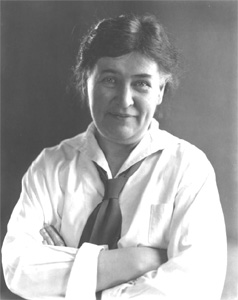 Willa Cather is a surprise for me…the type of author I wouldn’t expect myself to like. But I do, and I do so consistently. Death Comes for the Archbishop (hereafter DCftA) is the third Cather novel that I have read. I picked up O Pioneers for some reason while in high school. I don’t remember much about it except that it was the story of Scandinavian immigrants in Nebraska. A few years ago, I read My Antonia, another tale of turn-of-the-century Nebraskan immigrants, this time of Bohemian origin. I don’t know what draws me to Cather, but I find myself seeking out her writing again and again.
DCftA is very different, however, from those two immigrant-on-the-prairie novels. Instead, it’s the tale of two French priests sent to establish a diocese in the newly annexed New Mexico territory. The novel is picaresque-like in its episodic depiction of the conflicts and allegiances between the Americans, the Mexicans, the Natives, and the priests. It is the story of the priests’ friendship and of their faith at work in the barren desert. “The cheerful acceptance of the physical hardships and the joyful conduct of the missionary labors” is as good a description of the “plot” (see below) as any.
The main characters of the book, Latour and Valliant, are based on real life Father Jean Baptist Lamy, the first Archbishop of Santa Fe, and Rev. Joseph Priest Machebeuf, the first Bishop of Denver. I think an appropriate epithet (like in the movies) would be “inspired by true events,” as Cather took liberty with their stories and experience, meshing it with her own visit (on a wagon) to the Southwest in 1912, where she met another Catholic priest who shared with her many of the traditions and legends of the area’s long-time inhabitants.
DCftA is one of Cather’s later novels, coming almost a decade after My Antonia. It is also her most critically acclaimed work. Cather called DCftA a “narrative” as opposed to a novel, which I agree with. It isn’t written in the traditional novel form, relying on (often unrelated) vignettes rather than plot. It is called an anomaly in Cather’s fiction, though Robby over at Blogging the Canon mentions that My Antonia didn’t have much of a plot either. It had more of a plot than DCftA, I assure you. So, if you’re looking for conflict, psychological development and change in the characters, etc. – don’t bother with this book. You won’t find that here. DCftA is something entirely different, to be appreciated in an entirely different way.
Cather’s use of symbolism is rampant throughout the novel, and Biblical tales and sacred myth, medieval philosophy and miracles are all included, but not necessarily noticed on first reading. "A close reading of the text reveals intricate patterns beneath a disarmingly simple surface. As with other Cather novels, the unsophisticated can read it with pleasure for its stories and characters, its wonderful use of setting, and its elevating themes. Below its smooth face, however, the novel resonates with allegory, symbol and allusion.” I ran across this article, which gave the following example of the subtle mysteries depicted:
“…Bishop Latour and Jacinto take refuge in the cave to escape an oncoming blizzard. They enter through a rock formation that suggests stone lips and find themselves in a lofty cavern shaped something like a Gothic chapel. The Bishop feels an instinctive distaste for the place, for the presence of evil. He is in the secret chamber used by the Pecos Indians for their ancient pagan rituals. After his Indian guide seals up a mysterious hole in the wall of the cave and builds a fire, the Bishop sense a vibration in the rock. Jacinto takes him to a fissure in the floor where he can put his ear to the roar of an underground river, ‘a flood moving in utter blackness under ribs of antediluvian rock.’ ‘It is terrible,’ he said at last as he rose. This frightening scene, superbly managed, and for those fond of seeking Christian motifs in the novel, the Bishop, who suffered as Christ on the Cross in Chapter One, now has descended into hell after the crucifixion.”Was I really supposed to catch that on a first reading? The same article goes on to mention that the Biblical motif is taken even further by the parallel that the Bishop is initially rejected by those he came to save. Even the seven deadly sins are represented, and the characters that embody them are shown in the “Medieval manner in which appearance reflects moral nature.” Garden imagery appears time and time again, as the Bishop’s cultivation of the garden is an allegory for his cultivation and nurturing of souls, with his orchards and gardens filled with European vegetables and fruits taking hold in the desert symbolizing the European religion taking hold in the New World. This rich symbology, which is prevalent in many pieces of literature, such as Moby Dick, is why I am a fan and proponent of re-reading. Some of this stuff you just can’t get on a first read.
Sometimes, you read stories and you can tell that the author has some sort of animosity towards the characters that he or she is writing about…you can tell that there just isn’t much love there (Sinclair Lewis comes to mind). But Cather: you know that she admires, loves, and is invested in her characters and her story. They are treated with care. I won’t discuss Cather’s beautifully evocative descriptions of the Southwest landscapes, or the high quality of prose…for that you’ll have to read DCftA yourself.
What I find interesting is that Cather was writing at the same time as Hemingway and Fitzgerald, among others of course. DCftA was published in 1927…two years after The Great Gatsby and a year after The Sun Also Rises. She was telling such different stories than they were, and is much more on par with what Sinclair Lewis was writing about at the time. The contract between the two cultures (the Jazz Age and the Prairie stories, as I’ll call them) is so stark…they are two different worlds entirely.
DCftA was always the Cather book I wanted to read, as my high school English teacher had told me it was her favorite of Cather’s works. Personally, I prefer My Antonia, but then again, DCftA is a very different novel.
On a slightly related note, let me tell you a very funny (though perhaps exaggerated) story. Truman Capote, age 18, has noticed a woman that came frequently to the New York Society Library. One day, when unable to get a cab, she asked young Capote (exiting the library) if he wanted to go around to the corner and have a hot chocolate. (She had a hot chocolate, he a martini.) He mentions that he is a writer, and she asks what American writers he likes. He says, "I really like Willa Cather. Have you read My Moral Enemy?" She responds: "Actually, I wrote it." Can you imagine?
Tuesday, April 22, 2008
Dance Update
As April comes to a close, so does most of my monthly reading. There is always a feeling of anxiety about this time of the month regarding books. It’s an anxiousness to finish the damn things already, and also the feeling of saying goodbye to someone with whom you’ve spent the last month.
I’m plodding along through Dance to the Music of Time (2nd movement) but not as wearily as I did in the first movement. I’m starting to figure some things out in this book:
I’m plodding along through Dance to the Music of Time (2nd movement) but not as wearily as I did in the first movement. I’m starting to figure some things out in this book:
- New people are often introduced so that they can reintroduce people Jenkins already knows. For example: Heather Hopkins shows up at Norah and Eleanor’s apartment to borrow an egg. It is casually introduced that she has an upcoming piano gig with “that queen” Max Pilgrim – the one that Deacon yelled at at Milly Andriadis’s party in “A Buyer’s Market.”
- The plot is driven along SOLELY because Jenkins keeps getting invited to parties. He is at work, then his co-worker Chips takes him to his aunt’s house, where there’s a party going on. At her house, he runs into Mrs. Conyers, an old friend of the family. She invites him over to her place. There, he meets Frederica Tolland, who takes him to see her sister and his old friend Eleanor. Other than his dinner with Widmerpool, that’s all that has happened in the first 100 pages of the 2nd movement. Jenkins just ran into Quiggin and was invited to his cottage, so I imagine that the third chapter will be about that.
“Beginning in the 1920's, A Dance to the Music of Time follows the lives of a group of English friends and acquaintances as they make their various ways through life: meeting and parting, succeeding and failing, loving and hating, living and dying. There is ample room for both comedy and tragedy in this capacious, large-hearted work, but Powell's real triumph is the way he catches the rhythm of fate itself, the way it brings people together, only to spin them apart, then reunite them later as near-strangers, transformed in unexpected ways by the intervening years."
Thursday, April 17, 2008
A long book and challenging book meme
This is a conglomeration of a few different book memes that I found, mostly here, and a few of my own questions. :-) (Updated September 2011)
The books we buy:
1. Hardback, Trade Paperback, or Mass Market Paperback? Trade paperback is my favorite, with mass market a distant second, especially if the book is long. I like to carry multiple (as in, typically five or more) books around at a time, and hardbacks are much more cumbersome.
2. Buy or borrow? I typically buy, but borrow occasionally. I use the library mostly for books under 250 pages or for inter-library loans of long out-of-print books I can't find elsewhere.
3. Buying choice: Book reviews, recommendations, or browse? I get a lot of books based on recommendations from The Millions (my favorite book-related site) or NPR. Otherwise, I will only take recommendations from people who have read and liked books similar to others that I like (which is, pretty much, no one).
4. New or Used? Usually new, but I like used also. Sometimes it's nice to have a book that someone else broke in for you (like my copy of Jane Eyre)
5. The five most recent books you’ve bought for yourself? McEwan's Enduring Love and Saturday, Don Delillo's White Noise, Edouard-Levé's Suicide, and a story collection by Borges.
6. Books you’ve been hunting for years without success? I would say The Green Hat but I wouldn't say that I've been very active in hunting it. A tip: when hunting for books you can't seem to find, make sure you have the title that it was published under in your particular country. I spend a year or two investigating If This Is a Man. It wasn't until I got it through interlibrary loan that I realized it was readily available in the US as Survival at Auschwitz. Big *DURF* on my part!
7. Books you need to go with other books on your shelves? I have Regeneration by Pat Barker…there are two other books in the series.
The books we own…
1. Bookmark or dogear? Bookmark typically. I have a bookmark collection, and frequently make my own, sometimes to fit one particular book. I have already gone on a massively panicked search when I thought I had lost my favorite bookmark (which is a St. John's College one, in case you were wondering).
2. Alphabetize by author, by title, or random? Most are arranged randomly by whether I read them or not. Other books are typically arranged by shelf, by category. Beat literature and related texts are grouped together on their own shelf. I will not allow my Kerouac to mingle with the hoi polloi :-)
3. Keep, throw away, or sell? I mostly keep...probably about 95%. I usually donate the rest, though I've been known to throw away occasionally (like The Ginger Man – that copy went right in the garbage).
4. Books that filled you with a sudden, inexplicable curiosity, not easily justified, such that you had to have it? I have those weekly.
. Books that you own (or want to own) so they’ll be handy just in case? I have about 6 or 7 volumes of Will Durant's Story of Civilization (there are 11 total). I've never read a sentence out of them, but one day I'm sure they'll come in handy, right?
The books we read….
1. First book to leave a lasting impression? Though I had read a lot prior to this, the book that probably had the most impression was The Outsiders by S.E. Hinton. That and Voices After Midnight are my childhood favorites.
2. Name the book that has most made you want to visit a place? The English Patient made we want to visit North Africa. Maybe someday...you know, when they aren't revolting
3. Which book would you recommend to a teenager reluctant to try “literature”? If he is a teenager that has anything in common with me, I would always recommend Confederacy of Dunces. Kafka's The Trial would also be a good one. Others might be Catch-22, Crime and Punishment, On the Road, To Kill a Mockingbird, Lord of the Flies, etc. The youngsters also seem to like Catcher in the Rye, though I never did.
4. Name your best recent literary discovery? Erlend Loe's Naive Super
5. The last book you read? Billiards at Half Past Nine by Heinrich Boll
6. The last five books that have been really meaningful to you? Wow, this is really a challenge. If I get one really meaningful book in a year, that’s a good year. Last year it was The Age of Innocence. This year I’ve read a few – Lorrie Moore’s Anagrams and Noel Coward’s play Still Life being two.
7. Your five favorite books? The Great Gatsby, On the Road, The English Patient, Confederacy of Dunces, and...The Awakening, I suppose. Honorable mentions go out to The End of the Affair, Crime and Punishment, Virgin Suicides, Unbearable Lightness of Being, Nausea, The Stranger, and Lolita.
8. Favorite book of which nobody else has heard? There is a short story I read once called "The Hounds of Tindalos". I don't remember who wrote it, but it was insanely awesome and I was able to track it down in an obscure sci-fi anthology.
9. Books read long ago that it’s now time to re-read? Kafka's The Trial
10. The best non-fiction title you’ve read this year? I don't remember the last nonfiction I read.
The books we want to read…
1. Top five books on your “to be read” pile? Allison Pearson's I Think I Love You, Huxley's Point Counter Point, Leve's Suicide, Obrecht's The Tigers Wife, Hans Keilson's Comedy in a Minor Key and Le Carre's Tinker Tailor Soldier Spy. I also want to finally get around to Franzen. I feel like I'm completely missing the conversation.
2. Bottom five books on your “to be read” pile? Dostoevsky’s The Idiot, The Jungle, Ivanhoe, Hunchback of Notre Dame, etc.
3. Books you’ve been planning to read for ages? It’s almost become a game to me as to how long I can go WITHOUT reading One Hundred Years of Solitude. I’m up to 15 years.
4. Books that if you had more than one life you’d certainly read but unfortunately your days are numbered? Proust. I sometimes have lofty and unrealistic reading goals, but I don't go there.
5. The next book you will read? I Think I Love You.
The characters we know…
1. Which fictional parents do you most wish you had? Atticus Finch came immediately to mind. And I love Ma Joad. I know she's poor and uneducated, but she's awesome.
2. Which fictional character has the most balls? I was going to write Dr. Frankenstein, because he has the balls to create life, but I think Hester Prynne (Scarlet Letter)takes the award, IMO. An honorable mention to Lena Grove from Faulkner's Light in August. She walks from Alabama to Mississippi to find her baby daddy. Oh yes, and Edmond Dantes.
3. To which fictional character’s house would you most like to be invited for dinner? Gatsby. Or someone from Dance to the Music of Time. Those people know how to have a dinner party.
4. If you could invite 3 fictional couples to your home for dinner, who would they be? I can't think of any couples, but I wouldn't mind having a drink with Brett Ashley, Jordan Baker, and Holly Golightly and maybe Sabina from Unbearable Lightness. And maybe Mrs. Erdleigh from Dance to the Music of Time could come and read fortunes.
5. Which fictional character frightens you the most? Madame de la Rougierre from Sheridan LeFanu's Uncle Silas still gives me the creeps. Mrs. Danvers (Rebecca) is also frightening. I don't like old women stalking around, apparently. The Dust Witch and Mr. Dark from Something Wicked This Way Comes also frighten me.
6. Which fictional character could probably entice you into his/her bed? I'm going to go with Almasy from The English Patient.
7. Which fictional character would most likely have broken your heart? Ah, Mr. Rochester...*sigh* Which is funny, really, because Bronte doesn’t hide the fact that he looks like a horse and has his wife locked in the attic.
8. Three characters you wish you could meet? Well, Meurseult, Binx Bolling, Antoine Roquentin and myself could all get together and talk about our existential crises
9. Three fictional characters you're heartily glad that you'll never have to meet? Definitely Ignatius from Confederacy of Dunces. He's hilarious but absolutely the last person I'd like to run into anywhere. Rabbit Angstrom and Tom Buchanan (Gatsby) are the other two that come to mind immediately. Michael Henchard is a great big asshole as well.
10. Three characters you would like to be? This is perhaps toughest of all. I never much thought of it... I don't know that I'd like to be any particular character. Most people in the books that I read don't have such great lives, so perhaps I should leave well-enough alone, if you know what I mean. I always did identify with Alice (in Wonderland), though.
The authors we love (or hate)…
1. Who is your all-time favorite author? Jack Kerouac, if only for purely sentimental reasons.
2. Who is your least favorite author? Henry James, by a looooooong shot
3. Three authors you want to read more by? Margaret Atwood and Don Delillo come to mind.
4. Author you definitely want to read, but haven’t yet? Jennifer Egan is one. Franzen also, and David Foster Wallace.
5. Which contemporary author will still be read in 100 years? I’m so behind on contemporary literature that I really couldn’t say. I hope Foer continues to write.
Wednesday, April 16, 2008
Monday, April 7, 2008
Another Book Meme
I found this really fun book meme. I love these things:
One book that changed your life: There have been so many books that have affected me over my reading life, but one especially come to mind as having actually influenced actions in my life: The Awakening by Kate Chopin. When I read it in high school, I thought it was fabulous. But it wasn’t until I was in an emotionally/psychologically abusive marriage that I realized The Awakening’s full power. Suddenly, I saw myself completely as Edna, and I saw Edna’s end as my own. That was the turning point for me: the realization that I didn’t have to be Edna…that there was an alternative path for me as a woman of the 21st century that was not available to Edna at the turn of the 20th. Taking full advantage of that was the best decision of my life…and The Awakening was a major factor in that decision.
One book that you’ve read more than once: I reread a lot (though not recently), but the book that most clearly illustrates the joys of rereading is The English Patient. Everytime I read it, I find something new, or a different passage means something other than what they meant before. Over the course of my life, I have identified wholeheartedly with Almasy, Katherine, and Hana. In fact, identifying with Hana made me come to terms with a “relationship” I was sort of having with a German. It wasn’t meant to be and The English Patient helped me realize and accept that fact. Rereading that book has also shown me how much I have grown and changed since I first read it 11 years ago, so it’s as much a biography and measure of myself as it is an exquisite piece of art.
One book you’d want on a desert island: My first reaction to this is to say Robinson Crusoe, as it might give me some ideas for survival techniques. My second reaction is to want The Myth of Sisyphus by Camus, simply so that I could be reminded of complete futility, repetitiveness and meaninglessness of all life, not just life on a desert island. My third reaction is to want a very long, classic tome, such as Don Quixote, War and Peace, Moby Dick, Dante’s Divine Comedy, or even "Paradise Lost", as it would take a lifetime to fully comprehend these great works, and being on a desert island, I would have all the time in the world.
One book that made you laugh: The Confederacy of Dunces by John Kennedy Toole. The Funniest Book Ever. I often see those, “If you could invite any three literary characters to lunch…” questions, and I can never really think of anyone specific. But Ignatius always immediately comes to mind as THE literary character that I would NOT want to invite to lunch.
One book that made you cry: Miracle in the Rain by Ben Hecht. The movie of the same name makes me sob uncontrollably as well. The saddest, yet most uplifting story ever about the undying quality of love. *Sigh*
One book you wish had been written: I wish the John Kennedy Toole would have lived long enough to write more novels, because I’m sure that I (and many others) would have thoroughly enjoyed them.
One book you wish had never been written: The Ambassadors. Or maybe we should just make a clean sweep of James’s entire catalog and save the next generation of readers from having to read that crap.
One book you’re currently reading: A Room of One's Own by Virginia Woolf. My book club's topic for April is Jane Austen, so rather than read a bio of her, I thought I would be completely unconventional and read Woolf instead. It discusses Austen after all, and the miracle that her works were written in the first place, so that sort of counts, right?
One book you’ve been meaning to read: My TBR list is about ten miles long, so I will go with Possession by Byatt. It's been on the pile for too long. Hopefully I'll get to it this year. I can't imagine how free my book list will be in 2011, when I am finished with the Modern Library's list. Oh wait, it won't be free because I'll probably be getting through Time's list. By the time I'm finished with all the top 100 lists of the 20th century they will be writing them about the 21st century. IT WILL NEVER END!
Saturday, April 5, 2008
Rabbit, Run by John Updike
Have you ever seen those commercials for Adovart, the enlarged prostate medicine, in which the person in the commercial has a "going problem"? Well, Harry "Rabbit" Angstrom seems to have a similar problem. Rabbit, a 26-year-old former h.s. basketball star one day decides to leave his pregnant wife. So, he just leaves. He ends up living with part-time prostitute Ruth. After essentially forcing her to have oral sex with him as punishment for her "treatment" of him at dinner ("I need to see you on your knees"), he gets a call that his wife (Janice) is in labor. So, he leaves Ruth and goes back to Janice. They are in marital bliss until one night, shortly after the birth, Rabbit wants to have sex with Janice. She's not really feeling it - after all, she just had a baby - so Rabbit tries to force her to have anal sex with him. When that doesn't go his way, he leaves again. While he's gone, Janice (who's an alcoholic of sorts...) gets drunk and accidently drowns the baby while giving it a bath. Back comes Rabbit. He sticks around until the funeral, where he kindly tells his wife, "Don't look at me like that...it wasn't me who killed the baby." Obviously, people aren't really happy about that, so Rabbit turns around and does what he does best, which is run. He ends up back at Ruth's house. There he learns that she's pregnant, and has been thinking about getting an abortion. He tells her it's great that she's pregnant...he's left his wife for good and now they can be a family together. She gives him an ultimatum: get a divorce from Janice, or I'll have an abortion. Rabbit leaves to get sandwiches. But he isn't really going to get sandwiches. Guess what's he's really doing?
Rabbit is essentially an asshole. I don't know that I've ever come across such an irresponsible character before. Or one that I have disliked so much. Granted, the women in his life are always willing to take him back, no questions asked. They are also all pretty two-dimensional. There is Janice, his horribly stupid, drunk, childish wife; Ruth the not-quite-hooker-with-a-heart-of-gold (but close enough); the Mother-in-Law with the evil eye, etc. I read a couple other reviews on the web, many of which praise Rabbit as an individualist and someone who looks out for his own interests. Sure, that's true: he's an individualist, and he'll be damned if he lets anyone come in between him and his sense of freedom, or whatever it is that keeps him running away from everything. One essay I found even argued Rabbit's philosophy is akin to Thoreau's:
I suppose some people see their liberation in Rabbit: running away to solve one's problems. But there is a big difference between finding and doing what is right even when it conflicts with societal norms and just being an irresponsible asshole. And Rabbit is all of the latter, and none of the former.
Updike said in an interview that Rabbit, Run was his reaction to Kerouac's On the Road:
Rabbit is essentially an asshole. I don't know that I've ever come across such an irresponsible character before. Or one that I have disliked so much. Granted, the women in his life are always willing to take him back, no questions asked. They are also all pretty two-dimensional. There is Janice, his horribly stupid, drunk, childish wife; Ruth the not-quite-hooker-with-a-heart-of-gold (but close enough); the Mother-in-Law with the evil eye, etc. I read a couple other reviews on the web, many of which praise Rabbit as an individualist and someone who looks out for his own interests. Sure, that's true: he's an individualist, and he'll be damned if he lets anyone come in between him and his sense of freedom, or whatever it is that keeps him running away from everything. One essay I found even argued Rabbit's philosophy is akin to Thoreau's:
Updike’s intention for writing the novel is the same as the philosophy Thoreau presents: live life to find what is right, even if it means going against the norms of society.
I suppose some people see their liberation in Rabbit: running away to solve one's problems. But there is a big difference between finding and doing what is right even when it conflicts with societal norms and just being an irresponsible asshole. And Rabbit is all of the latter, and none of the former.
Updike said in an interview that Rabbit, Run was his reaction to Kerouac's On the Road:
"Jack Kerouac’s On the Road came out in 1957 and, without reading it, I resented its apparent instruction to cut loose; Rabbit, Run was meant to be a realistic demonstration of what happens when a young American family man goes on the road – the people left behind get hurt."I take great issue with this. On the Road is not an instruction to cut loose, though many (wrongfully) assume it is so. Sal Paradise is on essentially a hero's quest: to be transformed by America into a man, and also, pragmatically, to get material for a book. Sal (like Kerouac) wasn't the "American family man." His first marriage (childless) had been annulled and he lived with his mother. Hardly leaving behind the wife and kids. Kerouac, a deeply religious (Catholic), Republican mama's-boy (I say that out of love, Jack) never eschewed most of the social conventions of the time (other than a little sex and a little drugs), such as his strong belief in order, piety, and "white picket fences and the honey at home", as he so often reiterated. But of course nobody listened...they kept confusing Kerouac with Dean Moriarty, the Neal Cassady doppleganger of On the Road. Now there is a person who could be seen as the inspiration for Rabbit's action. Here was a "family man" (the term only loosely applies to Cassady - he was married and had children but was hardly what you would imagine as a typicaly family man). He married one girl (literally - I think she was 16), they got divorced, and he married again (while continuing to sleep with his first wife), then they divorced after a few kids, and he married again, had another kid, then went back to his second wife. Moriarty, had he been from a Pennsylvania, middle-class, stable family, might have been Rabbit. Rabbit, had he been a slightly schizophrenic son of a hobo alcoholic, who spent his entire childhood drifting across the country, might have been Moriarty. I would therefore classify Rabbit, Run as less of a reaction to On the Road as really showing what would happen if an actual family man took up the Moriarty torch. One also must keep in mind that at the end of On the Road, Paradise leaves Moriarty behind in favor of the traditional life. But then again, Updike states clearly that he didn't read On the Road. I wonder if he had, if he would have written Rabbit, Run in the same context.
I HATE Rabbit, like I hated the jocks in high school who got everything they wanted because they were superstars. But now they'd be 26, like Rabbit, and I wonder if any of them have similar "going" problems (and not the kind caused by prostates, though...). I truely, deeply hate Rabbit Angstrom. But to Updike's credit, I want to find out what happens to Rabbit in the subsequent Rabbit books. Hopefully, he gets his comeuppance.
Sunday, March 30, 2008
Dance to the Music of Time - The Movie Part 1
I'm gearing up for A Dance to the Music of Time, Second Movement, so I rented the first part of the movie version. This was a very good idea. One of the problems that I'm having with the novel is its length, which makes it difficult for me to link things that are said in one volume or chapter with a scene in the next volume or chapter. Those details aren't being linked. The movie made me realize this very clearly. For example: Widmerpool tells Jenkins that he was "very indiscreet" with Gypsy Jones and as a result, he had to pay for her to have an abortion. However, prior to this, Gypsy meets Widmerpool and Jenkins when she and Deacon attend a party with them. At the party, Deacon approaches Nick to ask if he knows a doctor for Gypsy... and he doesn't, "mean the usual general practitioner with the restricted views of his profession." Clearly, Gypsy was in the family way before she met Widmerpool, so her comment later to Nick that "somebody had to pay" makes a lot more sense. When I read about Widmerpool paying for her abortion, I assumed that he had gotten her pregnant, but obviously that wasn't the case: he was just the schmuck that paid.
Also, the quips about Mona: When we find out that she has married Templer (when Nick runs into him while waiting for Members), Mona is at the movies watching a movie that Templer thinks is about lesbians. When Nick tells him that it's not about lesbians, he says that Mona will be disappointed. When Mona was introduced as someone that Nick had already met, I didn't exactly remember. However, the movie made that scene clear. Mona is a friend of Gypsy and she is described by Members: "She really hates men." Will this be developed further in subsequent novels?
The movie makes clear how much Widmerpool is the brunt of everyone's jokes...as well as how he always shows up at the right moment. Sometimes it seems as if he is stalking Nick. There he is on the bus after the car accident with Duport; at the ball where he is described as "ploughing his way round the room, as if rowing a dinghy in rough water" (portrayed hilariously in the film); to pick up Stringham when he is drunk after the reunion.
Seeing the movie was like watching a movie about the lives of your friends, showing stories that you have heard them tell of, but that you weren't present for. The scene of Widmerpool dancing made me laugh out loud...it was so characteristically Widmerpool.
Thursday, March 27, 2008
Wings of the Dove
I finally finished the evil Wings of the Dove this morning. In fact, I got up early just to read the last ten pages before work, so I wouldn’t have to drag the book around another day. It went immediately onto the Abandoned Books pile…along with three other Henry James books that I had acquired before realizing that I dislike him more than any other author.
The Wings of the Dove is the story of Kate Croy and Merton Densher. Kate and Merton want to get married, but Merton is penniless, and Kate’s family want to see her marry someone with a little money. Along comes American Milly Theale, who met Merton when he visited New York on a business trip. Milly is rich…and she is dying. Kate also discovers that Milly has a thing for Merton. So, Kate hatches an idea: Merton is to pretend that he’s interested in Milly so that she will hopefully leave him at least part of her fortune when she croaks. Then, Merton will be rich and he can marry Kate.
This plan both does and does not work out the way that Kate anticipated. Milly finds out that Kate and Merton are engaged, and Merton refuses to deny it outright because he feels that to do so would be to betray Kate. This causes Milly to give up on life and accept death. Around the time of her death, Merton receives a letter from Milly. He wants Kate to open it. They are sure that it will state that Milly has left Merton some an inheritance despite their deception. Kate flings the letter into the fire. A few months later, Merton receives an envelope full of money from America, which he forwards to Kate. It's a test of sorts, and the fact that she opened it disappoints Merton. He wants to be free of the deception, as he was never really comfortable with it and only participated to please Kate. He gives Kate an ultimatum: marry him without the money, or take the money and be free of him. In other words: Merton wants Kate to marry him because of who he is, not because he has money - to go back to the way it was before Milly. But Kate asserts that it will never be that way again.
I will admit that this novel wasn't as bad as The Ambassadors. But as I said in a previous post, that's not really saying much. For the most part, I was able to discern the plot of Wings of the Dove, which is more than I can say for The Ambassadors. I have come to the conclusion that reading Henry James is like watching a movie through a very thick fog. I cannot really articulate it any better than that. It's like watching a movie through some mist which clouds everything, so that you can see movement, and you can hear dialog, but somehow it just isn't clear.
This book draws parallels with other pieces of literature, the most striking being Vanity Fair and Sister Carrie. The ending of WotD was very Sister Carrie-esque: the characters spend an entire novel trying to get to a certain goal only to find that reaching the goal wasn't what they thought it would be...the grass isn't always greener. Kate Croy reminded me very much of Becky Sharp from Vanity Fair. But while Becky Sharp is a character that is clear and pointed, Kate Croy is nebulous. I had written in response to Sister Carrie that one could tell the difference between a good novel with despicable characters and a mediocre one based on one's response to the character, and WotD definately fits into the mediocre category.
Henry James apparently went through three phases of writing, which are lovingly (I'm sure) called James the First, James the Second, and the Old Pretender. James the First culminated with The Portrait of a Lady (1881), meaning that The Americans, The Europeans, Daisy Miller and Washington Square are part of his apprentice years characterized as simple and direct (obviously the antithesis of his later period). James the Second runs until approximately 1897 during which he focused on short stories and plays. The Turn of the Screw fits into this period, as does What Maisie Knew and The Bostonians. The rest of literary career is as the Old Pretender, which is of course the period that includes the three novels on the Modern Library list: The Ambassadors, The Wings of the Dove, The Golden Bowl. This period is characterized by "frequent double negatives and complex descriptive imagery. Single paragraphs...run for page after page, in which an initial noun [is] succeeded by pronouns surrounded by clouds of adjectives and prepositional clauses, far from their original referents, and verbs [are] deferred and then preceded by a series of adverbs. The overall effect could be a vivid evocation of a scene as perceived by a sensitive observer." Note that the overall effect "could be" a vivid evocation... it could be, I suppose - but it isn't. Or maybe I'm just not a sensitive observer. If one must be a sensitive observer to enjoy, or at least understand, James's Old Pretender phase, I proudly proclaim that I am not a sensistive observer.
The Telegraph also describes The Golden Bowl as a "dense" novel. Great...something to look forward to! Two down, one to go.
One last note: I had problems finding websites about WotD (the novel at least...there is a plethora of them about the movie, which seems to have taken some liberties with the novel). The only one I could find is here.
In summary, WotD wasn’t as painful as The Ambassadors, and that’s about its only redeeming quality. I got a call yesterday from the library that my interlibrary loan is in – Primo Levi’s If This Is A Man. It must be the universe’s reward for finishing WotD.
The Wings of the Dove is the story of Kate Croy and Merton Densher. Kate and Merton want to get married, but Merton is penniless, and Kate’s family want to see her marry someone with a little money. Along comes American Milly Theale, who met Merton when he visited New York on a business trip. Milly is rich…and she is dying. Kate also discovers that Milly has a thing for Merton. So, Kate hatches an idea: Merton is to pretend that he’s interested in Milly so that she will hopefully leave him at least part of her fortune when she croaks. Then, Merton will be rich and he can marry Kate.
This plan both does and does not work out the way that Kate anticipated. Milly finds out that Kate and Merton are engaged, and Merton refuses to deny it outright because he feels that to do so would be to betray Kate. This causes Milly to give up on life and accept death. Around the time of her death, Merton receives a letter from Milly. He wants Kate to open it. They are sure that it will state that Milly has left Merton some an inheritance despite their deception. Kate flings the letter into the fire. A few months later, Merton receives an envelope full of money from America, which he forwards to Kate. It's a test of sorts, and the fact that she opened it disappoints Merton. He wants to be free of the deception, as he was never really comfortable with it and only participated to please Kate. He gives Kate an ultimatum: marry him without the money, or take the money and be free of him. In other words: Merton wants Kate to marry him because of who he is, not because he has money - to go back to the way it was before Milly. But Kate asserts that it will never be that way again.
I will admit that this novel wasn't as bad as The Ambassadors. But as I said in a previous post, that's not really saying much. For the most part, I was able to discern the plot of Wings of the Dove, which is more than I can say for The Ambassadors. I have come to the conclusion that reading Henry James is like watching a movie through a very thick fog. I cannot really articulate it any better than that. It's like watching a movie through some mist which clouds everything, so that you can see movement, and you can hear dialog, but somehow it just isn't clear.
This book draws parallels with other pieces of literature, the most striking being Vanity Fair and Sister Carrie. The ending of WotD was very Sister Carrie-esque: the characters spend an entire novel trying to get to a certain goal only to find that reaching the goal wasn't what they thought it would be...the grass isn't always greener. Kate Croy reminded me very much of Becky Sharp from Vanity Fair. But while Becky Sharp is a character that is clear and pointed, Kate Croy is nebulous. I had written in response to Sister Carrie that one could tell the difference between a good novel with despicable characters and a mediocre one based on one's response to the character, and WotD definately fits into the mediocre category.
Henry James apparently went through three phases of writing, which are lovingly (I'm sure) called James the First, James the Second, and the Old Pretender. James the First culminated with The Portrait of a Lady (1881), meaning that The Americans, The Europeans, Daisy Miller and Washington Square are part of his apprentice years characterized as simple and direct (obviously the antithesis of his later period). James the Second runs until approximately 1897 during which he focused on short stories and plays. The Turn of the Screw fits into this period, as does What Maisie Knew and The Bostonians. The rest of literary career is as the Old Pretender, which is of course the period that includes the three novels on the Modern Library list: The Ambassadors, The Wings of the Dove, The Golden Bowl. This period is characterized by "frequent double negatives and complex descriptive imagery. Single paragraphs...run for page after page, in which an initial noun [is] succeeded by pronouns surrounded by clouds of adjectives and prepositional clauses, far from their original referents, and verbs [are] deferred and then preceded by a series of adverbs. The overall effect could be a vivid evocation of a scene as perceived by a sensitive observer." Note that the overall effect "could be" a vivid evocation... it could be, I suppose - but it isn't. Or maybe I'm just not a sensitive observer. If one must be a sensitive observer to enjoy, or at least understand, James's Old Pretender phase, I proudly proclaim that I am not a sensistive observer.
This phasing of James's writing career could explain why I, at one point in time, enjoyed The Turn of the Screw. Yes, I admitted it - I did at one point in time enjoy that particular story. Perhaps all is not lost for Daisy Miller, Washington Square, or The Portrait of a Lady. Or maybe I should give up.
The Telegraph also describes The Golden Bowl as a "dense" novel. Great...something to look forward to! Two down, one to go.
One last note: I had problems finding websites about WotD (the novel at least...there is a plethora of them about the movie, which seems to have taken some liberties with the novel). The only one I could find is here.
In summary, WotD wasn’t as painful as The Ambassadors, and that’s about its only redeeming quality. I got a call yesterday from the library that my interlibrary loan is in – Primo Levi’s If This Is A Man. It must be the universe’s reward for finishing WotD.
Wednesday, March 19, 2008
Invasion of the Body Snatchers

Farmers. Grimaldi, Pixley... Gessner!
Seeds drifting through space for years...took root in a farmer's field. From the seeds came pods...which had the power to reproduce themselves...in the exact likenessof any form of life. So that's how it began...out of the sky.
Monday, March 17, 2008
Out of Their Minds - Clifford Simak
This short science fiction novel is very strange. The basic plot is that there is a parallel universe (though that isn't the term used in the book) which is comprised of all the fantasy characters that man has created over the centuries. This other world started out with characters who could build a culture - the devil, fairies, witches, enchanted castles, etc. However, now we are creating spineless characters - Mickey Mouse, Charlie Brown, etc...and the Devil isn't very happy about it. So, he starts to mess with our world in an attempt to make a deal to keep these silly creatures out of it.
It wasn't great writing, it wasn't great fantasy, but the concept of an alterative world in which Don Quixote could spar with Daffy Duck as the Scarlet Pumpernickel is a fun one (though that doesn't actually happen in the novel). Kind of like Who Framed Roger Rabbit ...but that was much better than Out of their Minds.
My only question is: why hasn't Terry Gilliam made a movie out of this? Just to see the odd bird-creature called The Referee come to life would be worth the entire project.
Tuesday, March 11, 2008
I hate Henry James and I'm not afraid to admit it
Wings of the Dove. I'll admit it's not as bad as The Ambassadors, but then that book was the worst book that I've ever read, so that's not really paying WotD a complement. I have a slightly better idea of what is going on than I did in The Ambassadors, in which I was so lost that I eventually just surrendered to the fact that I didn't get it, and would never get it, so I should just finish the stupid thing and be done with it. I feel the same way with WotD, though less so.
Here's what annoys me about Henry James: There are many times while reading any particular book when I suddenly realize that I don't really know what's going on. Oftentimes, that is my own fault for not paying attention. So, I go back and reread the last paragraph, or last page, or even last few pages, and I'm back up to speed on what is happening. With Henry James, however, it doesn't matter how much I read, or reread, or how intensely I pay attention...I still don't understand what's going on. His syntax is strange and he never seems to come to the point. His writing is circumlocutory: instead of writing one or two sentences, he writes 20, which really could be 60, circling around what he's trying to say. Most often, the only reason why I have any clue what is going on is because I read a summary of the book, so I know what is supposed to be going on, and I can kind of follow along. Note the "kind of," because even when I know the plot, I still am often lost.
When I was reading The Ambassadors, I thought that maybe I was just stupid...which is how I feel when I attempt to read Joyce, and occasionally Faulkner. That is until I found Doug Shaw's review of the book. I will be forever grateful to Doug Shaw for writing that review, as it completely saved my self-esteem...my feeling of worth as a reader. When reading Faulkner, or Joyce, or many of the other Writers For Very Intelligent Readers, I recognized it as such. But at least with them, if I worked at it hard enough, I could get it, and I would come out feeling so much smarter... there is a sense of accomplishment that comes with reading, finishing, and sort of understanding Joyce, or The Sound and Fury. But instinctively, I didn't feel that way with The Ambassadors. I kept thinking to myself, how did I become so stupid that I don't understand this? But then I found Doug Shaw, and I realized that I'm not stupid. The book is stupid. Henry James is stupid. It isn't just me.
While seeking out other people who hate Henry James, I found a lesson plan for high school teachers who are covering James. One of the suggestions was: 'Give students an in-class writing assignment: “What If You Were Henry James?”' What if I was Henry James? I would have saved the world the misery of having to read my books by never writing them.
Subscribe to:
Posts (Atom)